News Aug 16, 2026
Choosing the right conference room stackable chair supplier is important for project buyers who need flexible seating without wasting storage space. Modern conference rooms are rarely used for only one purpose. The same room may support internal meetings, client presentations, interviews, training sessions, workshops, temporary events, and visitor reception during the same week.
Because the room function changes often, chairs must be easy to move, simple to arrange, and convenient to store. Stackable chairs help staff reset the space quickly while keeping the room clean and organized. Buyers can view related commercial seating options in our Meeting Chairs category.
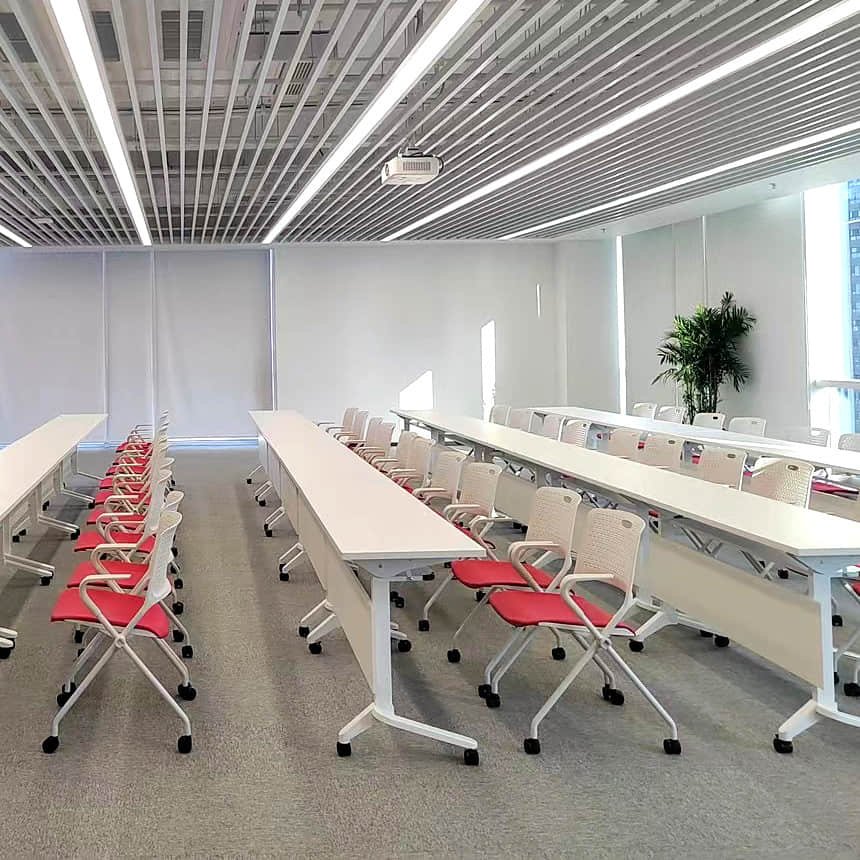
A reliable conference room stackable chair supplier should understand that space efficiency matters in offices, schools, hotels, and public meeting areas. When chairs are not in use, they need to be stored safely without taking up too much floor space. Stackable chairs make this easier by allowing multiple chairs to be placed vertically in a compact area.
This is especially helpful for conference rooms that host different group sizes. A small meeting may only need six chairs, while a training session may need twenty or more. With stackable seating, staff can adjust the room based on actual demand instead of keeping every chair on the floor at all times.
Stackable chairs are also useful for venues that change layouts often. A hotel meeting room, school lecture room, office boardroom, or event space may need different seating plans for different users. A stackable chair gives the room more flexibility without requiring a large storage area.
Some buyers worry that stackable chairs may feel too basic. In reality, a well-designed stackable chair can still offer good comfort for meetings and short training sessions. A supportive backrest, proper seat height, stable frame, and suitable seat depth all help improve the sitting experience.
For conference rooms, comfort is important because users may sit through long discussions, project reviews, presentations, or training sessions. Breathable back designs and curved support can help reduce discomfort during extended use. For general workplace seating reference, buyers can review OSHA ergonomics guidance.
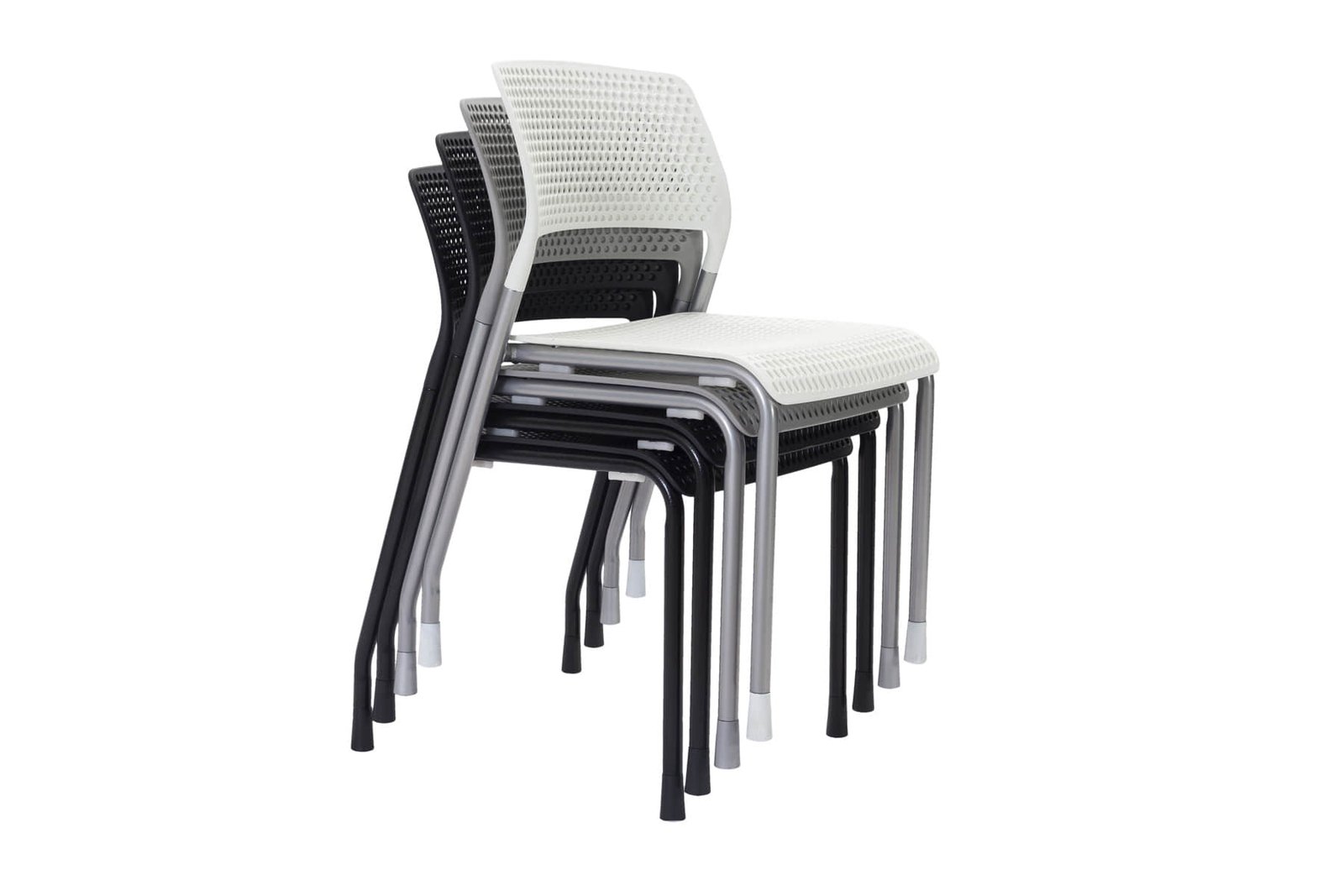
When working with a conference room stackable chair supplier, buyers should pay close attention to material details. Conference chairs are often moved, stacked, cleaned, and reused by different people. Weak frames, poor connections, thin plastic parts, or low-quality surface finishes may lead to faster damage and higher replacement costs.
Common commercial-grade materials include reinforced PP, steel frames, powder-coated metal surfaces, fabric upholstery, and strong foot glides. These materials are practical because they balance durability, weight, cost, and maintenance. For buyers comparing durability requirements in commercial seating projects, BIFMA standards are also worth reviewing.
Not all stackable chairs are equally easy to store. Before placing a bulk order, buyers should confirm how many chairs can be stacked safely, whether the frame design protects the seat surface, and whether the stacked chairs remain stable during movement. If the chairs will be moved often, buyers may also consider matching chair trolleys.
A professional conference room stackable chair supplier should provide clear information about stacking quantity, chair dimensions, packing size, CBM, and loading capacity. These details help buyers estimate warehouse space, shipping cost, and room storage requirements more accurately.
For large conference rooms or event venues, buyers should also ask whether the chairs are easy for staff to stack and unstack. If the chair is too heavy or awkward to handle, daily setup work can become slower. A good chair should save space without creating extra labor.
A good conference room stackable chair supplier should help buyers think about storage before the chairs arrive. Buyers should confirm where the stacked chairs will be kept between meetings, whether the storage area has enough height, and whether the chairs need to pass through narrow doors or elevators.
This is especially important for hotels, schools, office buildings, and event spaces where the same room may change from a board meeting to a lecture layout in one day. Clear storage planning prevents crowded corners, damaged chair surfaces, and extra labor during room setup.
Buyers should also consider whether stacked chairs need protective glides or frame designs that reduce scratching. For projects with high use frequency, these small details can affect how the chairs look after months of daily handling.
Stackable chairs are not limited to conference rooms. They are also practical for classrooms, training rooms, waiting areas, event halls, hotel meeting spaces, church rooms, community centers, and public service areas. For buyers who manage several types of rooms, stackable chairs can provide one flexible seating solution across different spaces.
If the project also needs chairs for learning or workshop spaces, buyers can explore our Training Chairs collection. For general office seating, our Office Chairs collection also provides more options for daily work environments.
A good conference room stackable chair supplier should provide more than product photos. Buyers should ask for product size, net weight, frame material, packing size, quantity per carton, available colors, production lead time, and after-sales support. For large projects, model consistency is also important because repeat orders may be needed later.
This matters for contractors, office furniture dealers, school buyers, hotel procurement teams, and workspace planners. A supplier with project experience can help buyers choose the right chair structure instead of simply recommending the cheapest model.
A reliable supplier should also understand export packing, carton labels, loading suggestions, and communication before shipment. For international buyers, these details can save time and reduce misunderstandings during delivery.
Before ordering stackable conference chairs, buyers should calculate the number of seats needed for each room, the space available for storage, and the expected frequency of use. A meeting room used once a week may have different seating needs from a seminar room used every day.
Working with an experienced conference room stackable chair supplier can make the project smoother. The right supplier can help with quantity planning, packing details, model selection, and repeat supply. For buyers comparing more seating options for meeting areas and flexible workspaces, our Office Chairs collection is also worth reviewing.
To get a useful quotation, buyers should prepare the room type, target quantity, preferred chair style, color requirement, destination country, and expected delivery schedule. If the chairs need to match an existing table, interior color, or project design, it is helpful to mention that early.
For bulk orders, buyers should also ask for packing size, CBM, quantity per carton, and loading quantity. A clear inquiry helps the supplier recommend a suitable stackable chair model instead of sending a general catalog. It also helps buyers compare quotations more fairly.