News Aug 16, 2026
A training room furniture supplier for schools should understand that school furniture is used heavily. Chairs and tables may be moved between lessons, cleaned often, and used by many different students throughout the week. The furniture must be practical, durable, and easy to manage, not just good-looking in photos.
For schools, training room furniture affects more than appearance. It influences classroom capacity, storage efficiency, cleaning work, student comfort, and long-term replacement cost. A chair or table that works well in a showroom may not always work well in a real classroom with daily use.
HAKKAS supplies training chairs and training tables for schools, seminar rooms, and commercial learning projects. Buyers can start with our Training Chairs collection and Training Tables category.
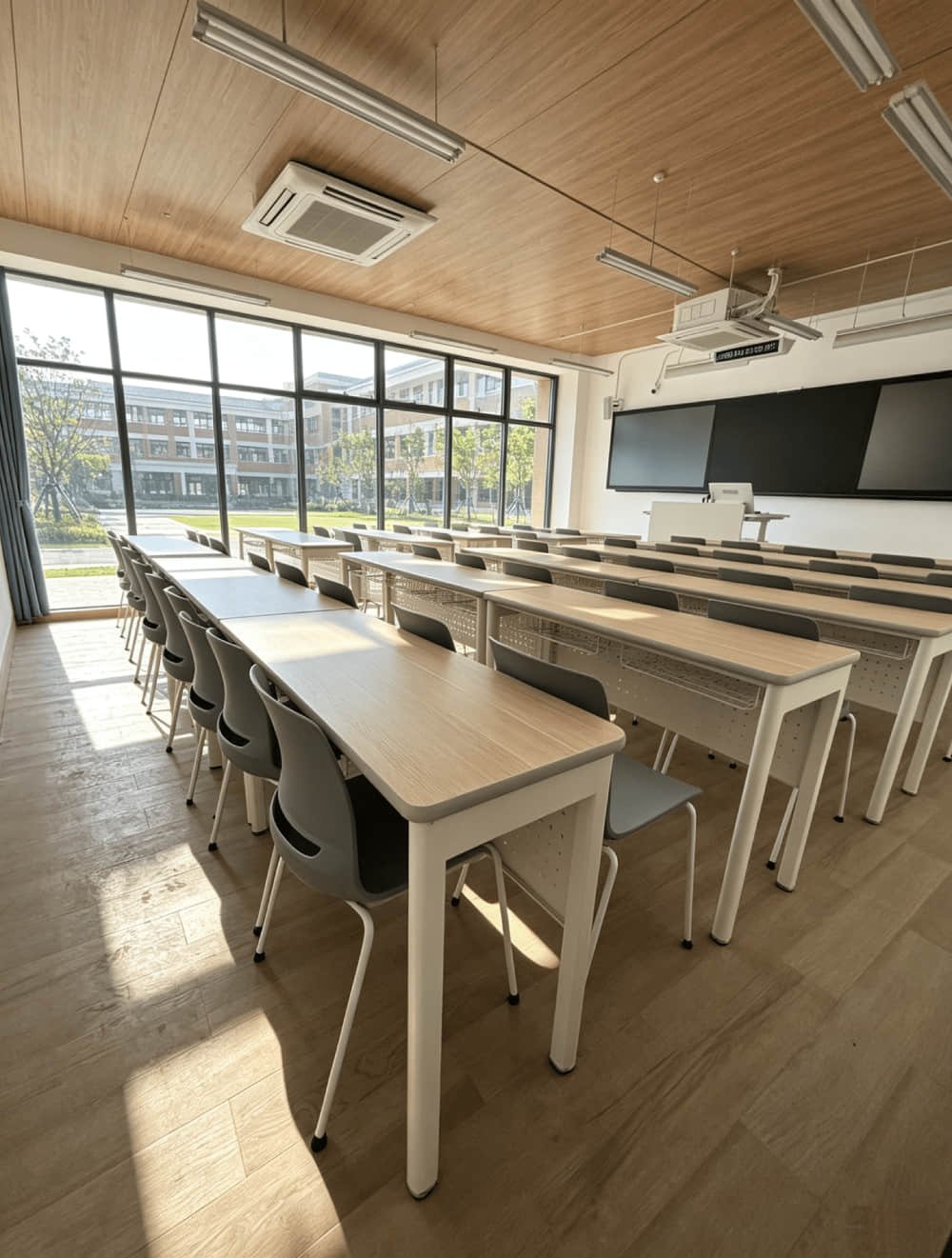
Good school training rooms need more than individual chairs. The table height, chair seat height, aisle width, storage space, and room capacity should be planned together. If the chair is too low for the table, students may feel uncomfortable. If the table is too wide, the room may lose seating capacity.
A professional training room furniture supplier for schools can help buyers match chair and table models based on room size and layout needs. Folding chairs with movable training tables can support lectures, group work, exams, workshops, and temporary meetings. This is especially useful for schools and training centers that use one room for different activities.
Different school spaces need different seating. Standard classrooms may need stackable chairs that are easy to clean and store. Seminar rooms may need more comfortable training chairs with breathable backs or upholstered seats. Lecture-style rooms may need folding training chairs with writing tablets. Multi-purpose rooms may need lightweight chairs that can be moved quickly.
When choosing a training room furniture supplier for schools, buyers should explain how each room will be used. This helps the supplier recommend the right chair type instead of sending only a general product list.
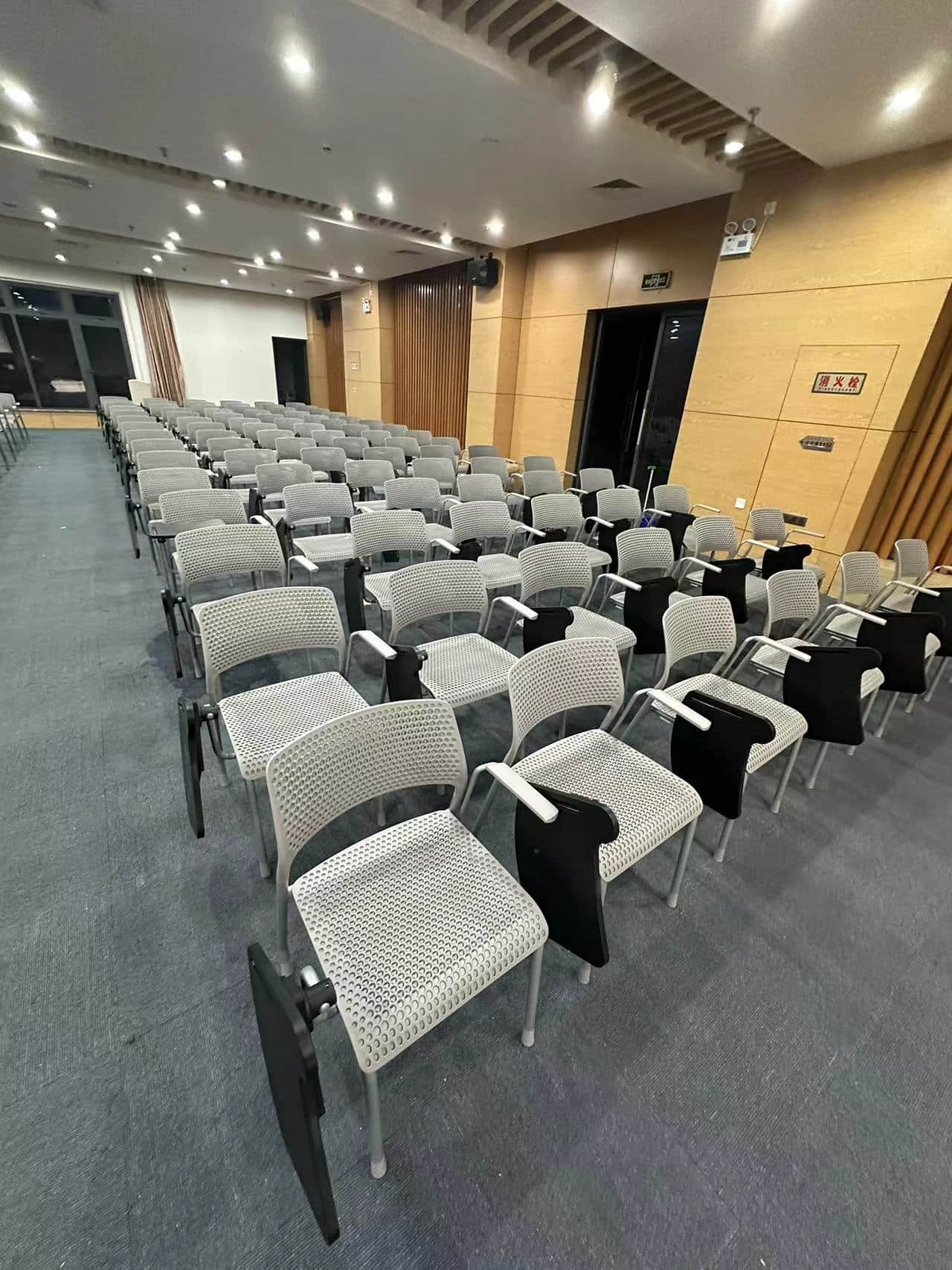
Schools often buy furniture in quantity, so replacement cost matters. Buyers should check frame material, tabletop thickness, caster quality, seat structure, backrest material, packing size, and CBM before confirming an order. Low-cost furniture may look attractive at first, but if chairs or tables fail quickly, the total project cost becomes higher.
For school projects, strong frames, stable connections, easy-clean surfaces, and practical packing are important. For commercial durability comparison, BIFMA standards are useful
A training room furniture supplier for schools should support more than one classroom format. Some lessons need straight rows facing a screen. Some need group tables for discussion. Some rooms need to be cleared quickly for exams, meetings, or events. Because of this, buyers should choose chairs and tables that can be moved without too much effort.
Mobile training tables with brake casters, stackable chairs, and folding chairs are all useful in school projects. Good planning makes the room easier for teachers and staff to manage after the furniture is installed.
Storage is often ignored during purchasing, but it affects daily work after the furniture arrives. If chairs cannot stack well or tables cannot move smoothly, staff may spend extra time resetting the room. For schools with limited storage space, stackable or folding designs can make a big difference.
Cleaning is another practical point. PP chair shells, powder-coated metal frames, and smooth tabletops are easier to maintain in high-use learning spaces. A good supplier should help buyers choose materials based on the real environment, not only on price.
Before contacting a training room furniture supplier for schools, buyers should prepare basic project information. Useful details include the number of classrooms, room size, target seating capacity, chair type, table size, color preference, destination country, and expected delivery time.
If the school already has a layout drawing, it is worth sharing it with the supplier. Even a simple sketch can help with model selection and quantity planning. A clear inquiry can lead to a faster quotation and fewer changes before production.