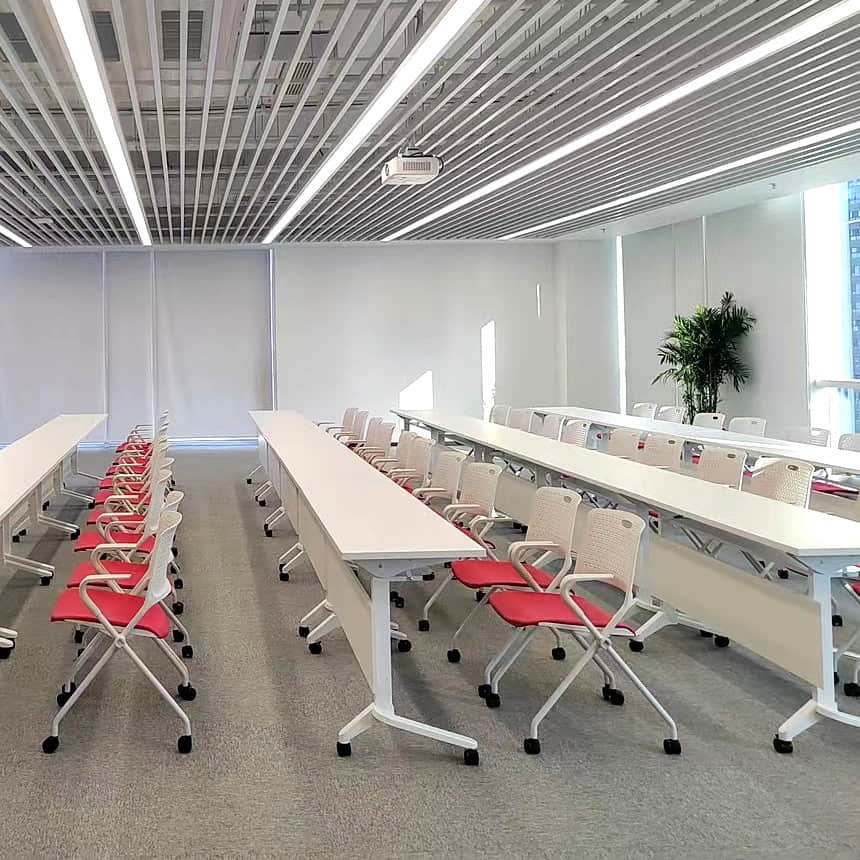
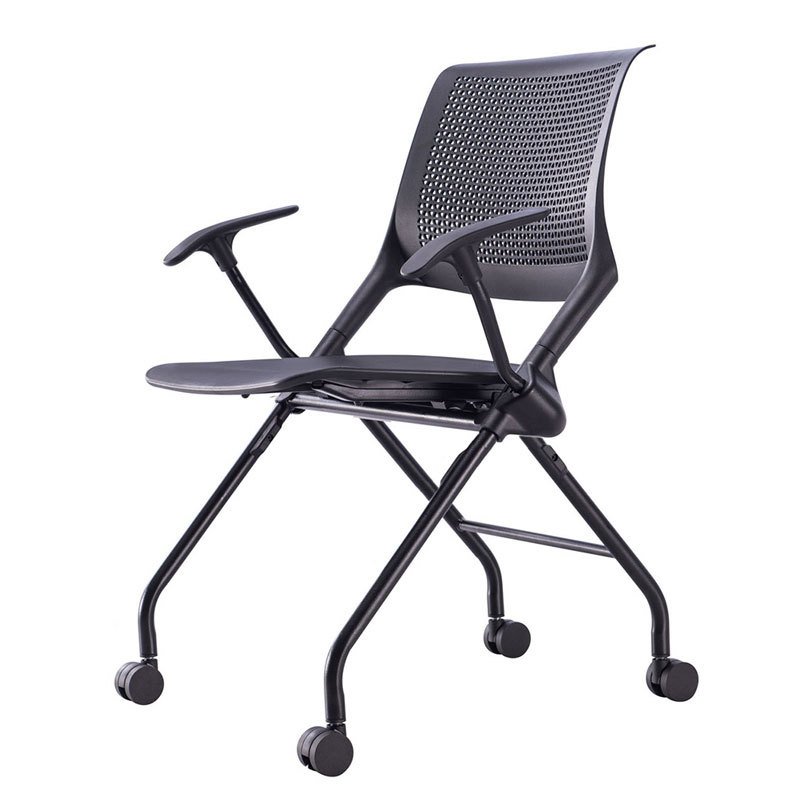
A
training chair with armrest gives users a defined place to rest their arms while supporting a more organized seating position. For classrooms, corporate learning rooms, seminar areas, and meeting spaces, that small feature can make a noticeable difference during longer sessions.Commercial buyers, however, need to compare more than comfort alone. Frame strength, room density, mobility, storage, maintenance, and order consistency all affect whether a chair will work well after installation.This guide explains how to select a chair with arms for a real project, from the first layout drawing to the final quotation.

Why Choose a Training Chair with Armrest?
Armrests can improve support when people listen, read, or take part in presentations for an extended period. They can also make a training chair feel more structured than a simple side chair.This makes the design useful in corporate academies, professional seminar rooms, conference training areas, and adult learning spaces.The trade-off is width. Chairs with arms generally need more lateral space than armless models. Before specifying them, buyers should confirm the required seat count, aisle widths, door positions, and storage method.A comfortable chair is only successful when it also fits the room plan.For a model designed around flexible layouts, see the
HAKKAS YB1-SF folding training chair with armrests. Its flip-up seat, casters, and nesting structure are useful where the room changes between sessions.

Five Details Commercial Buyers Should Compare
1. Armrest Shape and Support
An armrest should support the forearm without forcing the shoulders upward. Its edges should feel smooth, and the structure should remain stable during normal entry and exit.Buyers should also check whether the armrests are fixed, removable, or shared with another accessory.If a writing tablet may be added later, confirm compatibility before ordering. An armrest and a tablet can compete for the same mounting position, so the configuration must be approved as a complete chair rather than as separate parts.
2. Backrest and Seat Comfort
For short sessions, a well-shaped PP seat and ventilated back can be practical and easy to clean. For longer programs, an upholstered seat or mesh-back option may provide additional comfort.The right choice depends on sitting time, climate, cleaning requirements, and the buyer’s target price.A backrest with a supportive curve can help users maintain a more comfortable posture. Buyers can use commercial furniture guidance from
BIFMA as a starting point when discussing durability and performance requirements with suppliers.
3. Frame and Base Type
Four-leg frames are simple and stable. Sled bases can create a clean visual line. Caster bases improve movement, while folding or nesting frames reduce storage pressure.No single base is best for every project.For rooms that are reconfigured frequently, mobility and compact storage often matter more than a permanently fixed seating arrangement.
4. Mobility and Room Flexibility
Training spaces are often used for more than one activity. One room may host a presentation in the morning, group training in the afternoon, and a meeting later in the day.Chairs with smooth casters can make these changes easier. However, buyers should make sure the casters are suitable for the installed flooring and do not create excessive noise during movement.For a more controlled classroom layout, fixed feet or glides may be preferable. The decision should reflect how frequently the room changes and who will be responsible for moving the furniture.
5. Maintenance and Replaceable Parts
Training environments have many different users. Surfaces should therefore be easy to wipe, and frequently handled areas should not have unnecessary gaps.Ask whether arm pads, glides, casters, seat cushions, and other high-contact components can be replaced separately.Access to replacement parts can extend the useful life of a commercial seating installation and reduce the cost of dealing with minor damage.
Fixed, Folding, or Stackable?
A fixed
training chair with armrest is suitable for rooms that keep a stable layout. A folding or nesting chair is better when staff must clear the floor or change the setup quickly.A stackable chair can be efficient when vertical storage is available and the chair is light enough for safe handling.Each design serves a different operating routine:
- Fixed chairs support consistent classroom and seminar layouts.
- Folding chairs help reduce the space needed for horizontal storage.
- Nesting chairs can be collected quickly after a session.
- Stackable chairs use vertical space in a storage room.
- Mobile chairs support collaborative and frequently changing layouts.
Explore the complete
HAKKAS training chairs collection to compare fixed, folding, stackable, tablet-arm, and mobile configurations.
How Armrests Affect Room Capacity
Armrests add width to the chair and may reduce the number of seats that fit comfortably in one row. Buyers should not calculate capacity using seat width alone.The complete chair width, usable writing space, aisle clearance, access routes, and local safety requirements must all be considered.For large projects, it is helpful to place the selected chair dimensions into the floor plan before confirming the order. This makes it easier to identify narrow aisles, crowded entry points, or insufficient space between rows.A physical sample can also help the project team evaluate how easily users enter, leave, and move around the chair.
Matching Armrests with Writing Tablets
Some training projects need both arm support and an integrated writing surface. In this case, buyers should confirm how the tablet attaches to the frame and whether it affects the opposite armrest.Important questions include:
- Is the writing tablet fixed, folding, or removable?
- Is it available for left-handed users?
- What are the usable tablet dimensions?
- Can the chair still stack or nest with the tablet attached?
- Are replacement tablets and mounting parts available?
- Does the tablet interfere with entry and exit?
Approving the complete configuration helps prevent compatibility problems after production.

What to Include in a Quotation Request
Send the supplier a concise project brief containing:
- Room type and target quantity
- Preferred fixed, folding, stacking, or caster base
- Expected sitting time
- PP, mesh, or upholstered seat preference
- Required color or finish
- Destination country and delivery schedule
- Need for writing tablets, storage racks, or chair trolleys
- Any OEM branding or packaging requirements
This information allows the supplier to recommend a suitable configuration and packing plan instead of quoting a generic chair that may not fit the project.
Why Work with HAKKAS?
HAKKAS supplies commercial seating solutions for classrooms, corporate training rooms, meeting spaces, seminar venues, and flexible learning environments.The product range includes training chairs with armrests, folding and nesting chairs, stackable chairs, writing-tablet models, office training chairs, and matching training tables.For dealers, contractors, importers, and project buyers, HAKKAS can support product selection, configuration confirmation, bulk-order communication, and export-oriented supply.
Final Recommendation
The best training chair with arms balances user support with layout efficiency.Start with room capacity and the daily operating routine. Then compare armrest comfort, frame type, seat material, mobility, storage, and maintenance requirements.A chair should not be selected only because it looks comfortable in a product image. It must also fit the floor plan, support the expected sitting time, and remain practical for staff to move, clean, and store.
Planning a classroom or corporate training project? Contact HAKKAS with your quantity, room layout, and target configuration to request a product recommendation and quotation.Frequently Asked Questions
Are armrests useful on training chairs?
Yes. Armrests can provide additional forearm support and make longer seminars or training sessions feel more comfortable. Buyers should confirm that the extra chair width still fits the planned room capacity.
Can a training chair with armrest also have a writing tablet?
Some models support both features, but the mounting arrangement varies. Confirm the complete configuration, tablet side, and available writing area before approving a bulk order.
Are folding training chairs with arms easy to store?
They can be, especially when they use a flip-up seat and nesting frame. Buyers should check the nested footprint and storage-room dimensions rather than assuming every folding chair stores in the same way.