News Aug 18, 2026
Writing tablet chairs are widely used in training rooms, classrooms, seminar halls, lecture spaces, and office learning areas because they combine seating and writing support in one compact product. Instead of placing a separate table in front of every user, a chair with writing tablet gives each person a small surface for notes, documents, tablets, or training materials.
For schools and training centers, this helps improve room capacity. For offices and seminar spaces, it makes the room easier to arrange and reset after each session. Buyers planning flexible learning areas can also review more training seating options in our Folding Training Chairs category.
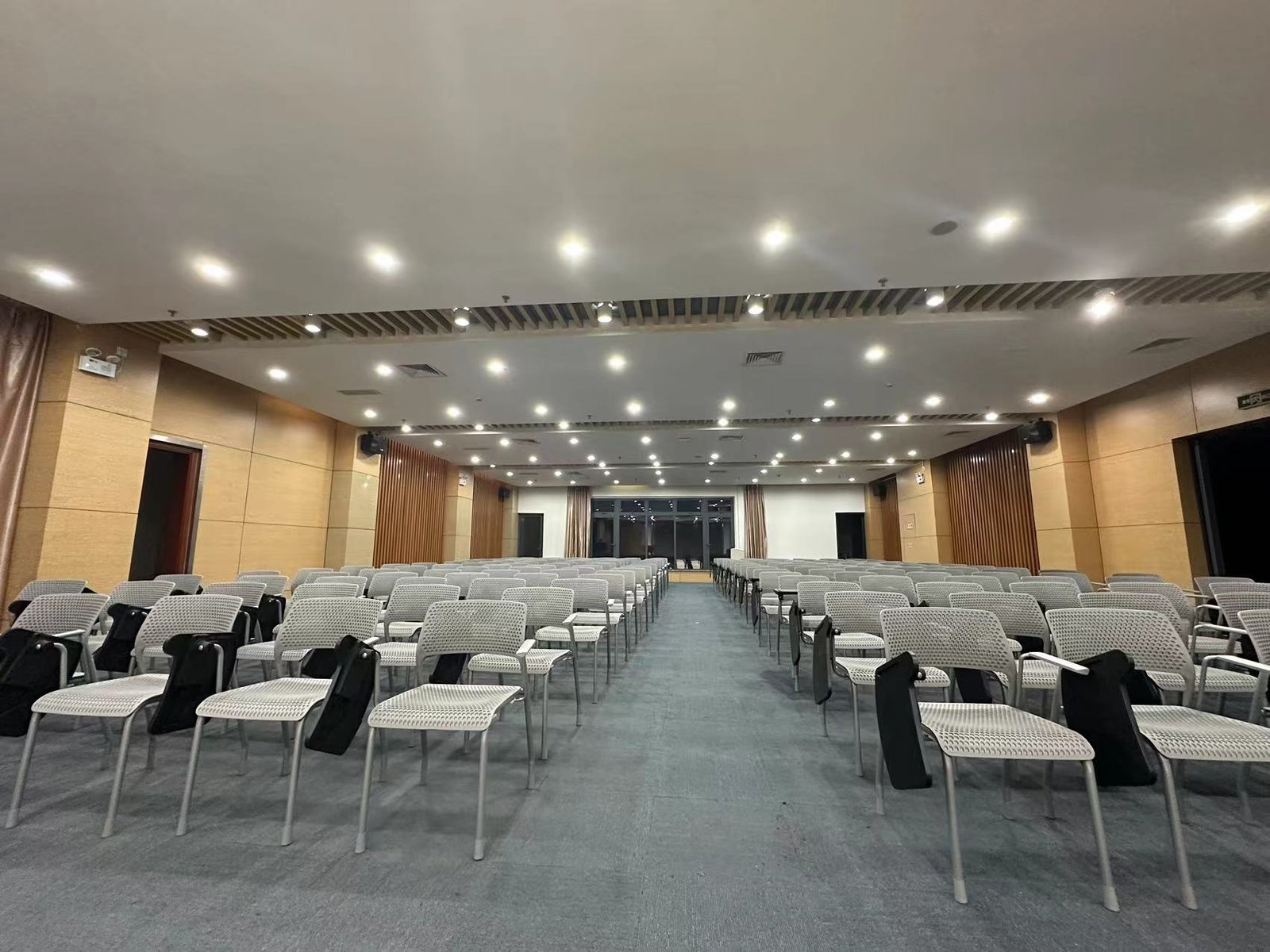
Before choosing writing tablet chairs, buyers should think about how the room will be used. A classroom may need chairs that are easy to clean and move. A corporate training room may need folding chairs with casters. A seminar room may need more comfortable seats for longer sessions. A public lecture hall may need a chair with a stronger frame and storage rack.
Common options include folding training chairs with writing tablet, conference chair with writing tablet, and training chair with writing pad. These designs look similar at first, but their functions can be very different. Some chairs fold for storage. Some include a lower rack for bags. Some have a breathable backrest, while others use a full PP shell for easier cleaning.
The writing tablet is the main feature of this chair type, so it should be checked carefully. A good writing tablet should be large enough for notes, printed documents, and small learning materials. It should also feel stable when users write or place a tablet on it.
For bulk orders, buyers should ask about the tablet material, thickness, hinge structure, folding direction, and whether the writing surface is suitable for left-handed or right-handed users. ABS and PP writing tablets are common because they are lightweight, easy to clean, and practical for daily commercial use.
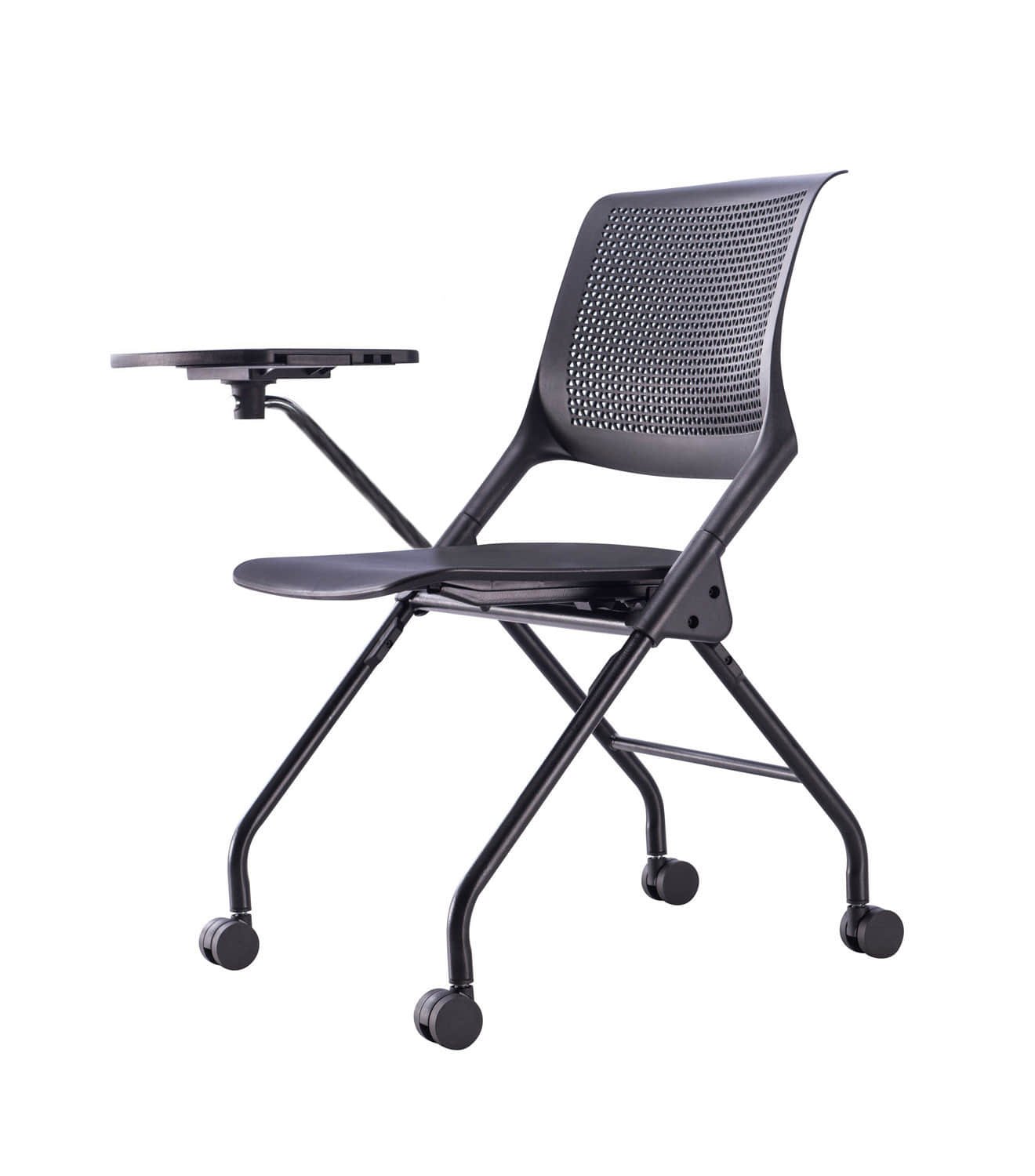
Writing tablet chairs are often used in lectures, training sessions, meetings, and seminars that may last for several hours. Comfort should not be ignored. A chair may save space, but if users cannot sit comfortably, the room will not feel professional.
Buyers should check seat height, seat depth, backrest shape, cushion material, and arm support if available. For longer sessions, upholstered seats or breathable mesh backs may be more comfortable than hard plastic seats. For general seating comfort reference, buyers can review OSHA ergonomics guidance.
Some writing tablet chairs include a lower storage rack. This feature is useful in classrooms, training rooms, and seminar spaces where users bring books, folders, bags, or printed materials. A storage rack helps keep the floor cleaner and gives users a place to keep personal items during the session.
For rooms without separate desks, storage racks are especially helpful. They allow the writing tablet to stay free for note-taking while books or bags stay below the seat. Buyers comparing writing tablet chairs should decide whether the storage rack is necessary based on the type of training and the amount of materials users bring.
Many buyers choose writing tablet chairs because they save space. Folding models are useful for rooms that need to change layouts often. After a class or seminar, chairs can be folded and stored more efficiently. This is useful for schools, corporate training centers, hotels, event venues, and multi-purpose meeting rooms.
If the room changes layout every day, buyers should check how smoothly the chair folds, whether it can be moved easily, and how much space it takes when stored. Some folding models include casters, making them easier to move in larger rooms.
Frame quality affects the long-term value of writing tablet chairs. These chairs are often folded, moved, opened, closed, and used by different people every day. Weak frames or poor hinge connections can create problems after repeated use.
Buyers should check tube size, tube thickness, welding quality, surface finish, foot pads, and the connection between the tablet and frame. For commercial seating durability comparison, BIFMA standards are also worth reviewing.
Writing tablet chairs are a good choice for note-taking, printed documents, and short tablet use. However, they do not fully replace training tables in every situation. If users need to work on laptops for long sessions, join group discussions, or use larger materials, training tables may be better.
Many projects use both solutions. Lecture rooms may use writing tablet chairs, while workshop rooms use movable training tables. Buyers planning mixed learning spaces can review our Training Tables category.
Writing tablet chairs are suitable for schools, training centers, conference rooms, seminar halls, lecture rooms, government training spaces, office learning areas, and public education projects. They are especially useful when the room needs higher seating capacity and flexible layout changes.
For meeting and conference spaces, buyers can also compare related seating options in our Conference Chairs category.
Before contacting a supplier, buyers should prepare the target quantity, room type, preferred chair structure, writing tablet side, color requirement, destination country, and expected delivery time. If the project includes several rooms, it is helpful to list each room separately.
For bulk orders, buyers should also ask for product size, folded size, packing size, CBM, quantity per carton, net weight, gross weight, and loading quantity. A clear inquiry helps the supplier recommend the right writing tablet chairs and provide a more accurate quotation.