News Aug 12, 2026
If you are learning how to choose a folding training chair manufacturer, the first step is to understand where the chairs will be used. A school classroom, corporate training room, seminar hall, hotel meeting area, public lecture space, and multi-purpose meeting room may all require different chair functions.
Some spaces need chairs that fold tightly for storage. Some need casters for easier movement. Others need writing tablets, storage racks, or breathable backrests for longer training sessions. Before comparing prices, buyers should list the actual room use, average sitting time, layout change frequency, and storage conditions. Buyers can begin by reviewing practical models in our Folding Training Chairs category.

One of the most important parts of how to choose a folding training chair manufacturer is checking the folding structure. A folding chair should open and close smoothly, stay stable during use, and store efficiently when the room needs to be cleared. If the folding mechanism is weak or poorly connected, the chair may become loose after repeated use.
Buyers should check hinge quality, seat support, frame connection, caster design, and whether the chair remains balanced after folding. In bulk projects, a small structure problem can become a large after-sales issue. A professional manufacturer should be able to explain the folding design clearly and provide product images, videos, or samples when needed.
The frame is the foundation of a folding training chair. Steel tube thickness, welding quality, powder coating, leg structure, and base stability all affect long-term durability. For schools, training centers, and seminar rooms, chairs may be moved many times each week, so frame strength should not be ignored.
When considering how to choose a folding training chair manufacturer, buyers should ask for frame material details instead of only looking at appearance. A stronger frame may cost slightly more, but it often provides better long-term value. For commercial seating durability comparisons, buyers may also review BIFMA standards.
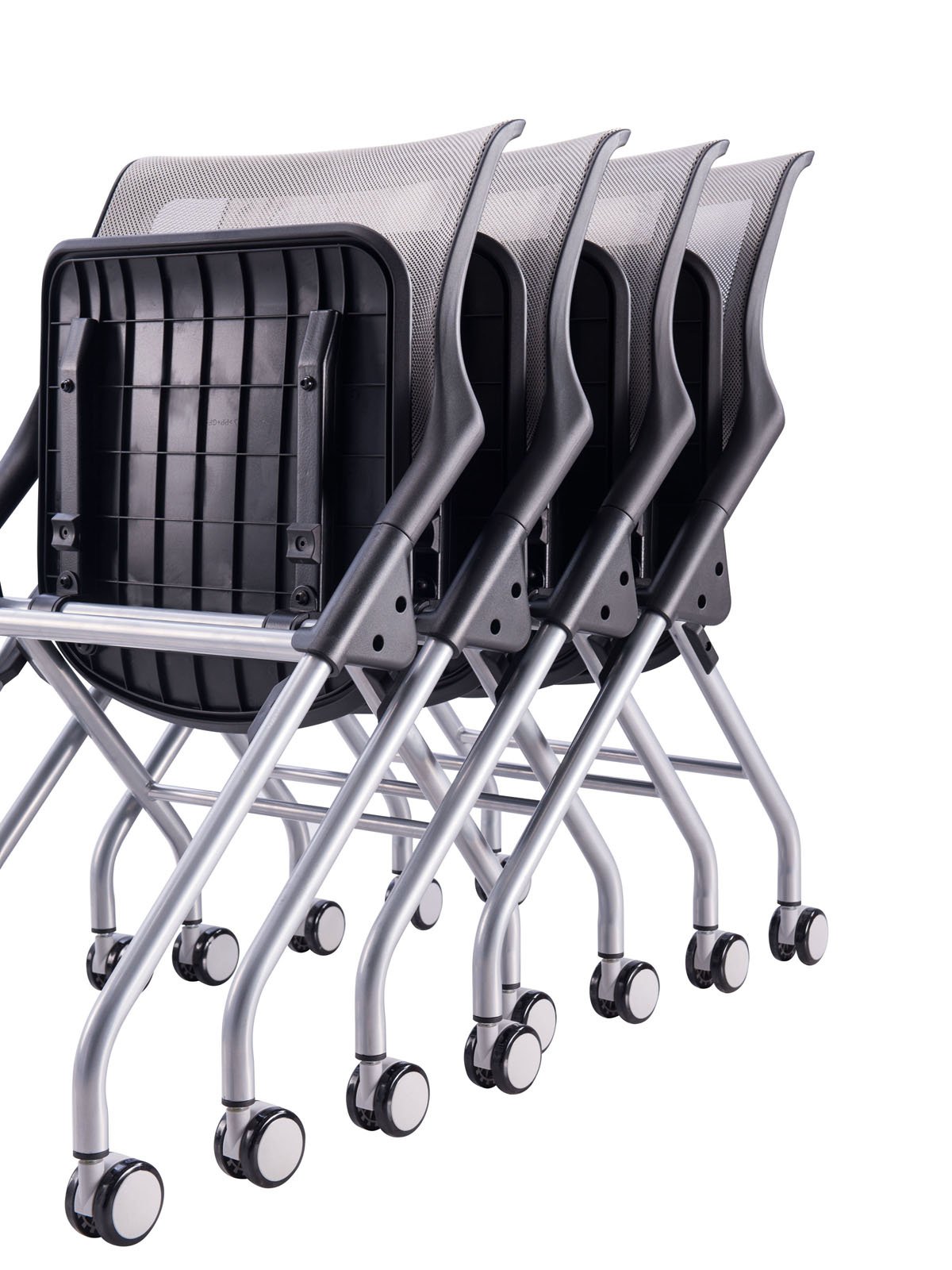
Training chairs are often used for classes, meetings, workshops, and seminars that may last several hours. A chair that is easy to fold but uncomfortable to sit on will not be suitable for serious training spaces. Buyers should check backrest shape, seat height, seat depth, cushion quality, and armrest design if the chair will be used for longer sessions.
A breathable backrest can improve airflow, while a supportive seat helps users stay focused during meetings or lessons. For general workplace seating comfort guidance, buyers can review OSHA ergonomics information.
Packing is often overlooked, but it directly affects total project cost. When studying how to choose a folding training chair manufacturer, buyers should ask for packing size, quantity per carton, CBM, net weight, gross weight, and loading quantity. These details help calculate freight cost, warehouse space, and delivery planning.
A professional manufacturer should provide clear packing data before order confirmation. If the packing information is unclear, the final shipping cost may be higher than expected. Buyers planning complete training rooms may also need matching tables from our Training Tables category.
Price matters, but it should not be the only factor. A very low price may come with thinner materials, weaker connections, poor packing, or unstable production. For project buyers, after-sales communication, model consistency, lead time, and repeat order support are just as important.
A reliable folding training chair manufacturer should help with model selection, color options, quantity planning, sample confirmation, production schedule, and packing review. This kind of support is especially useful for schools, contractors, office furniture dealers, hotels, and training centers.
Another key point in how to choose a folding training chair manufacturer is consistency. In a small order, one or two small differences may not be obvious. In a school or office project with hundreds of chairs, inconsistent color, uneven frame finish, or different packing methods can create real problems.
Buyers should ask whether the manufacturer can support repeat production of the same model and whether product details remain stable across batches. For seating projects that also include conference rooms or meeting areas, buyers can review our Meeting Chairs category.
A good manufacturer should understand more than chair production. They should know how project buyers think: delivery timing, container loading, space planning, product matching, and long-term replacement needs all matter. This is why learning how to choose a folding training chair manufacturer can help buyers make better purchasing decisions before a project begins.
The right manufacturer will ask about room type, quantity, country, budget, and use scenario before recommending a chair. This makes the final selection more practical and reduces the risk of buying a model that does not fit the space. Buyers who need more seating options for offices and public areas can also browse our Office Chairs collection.