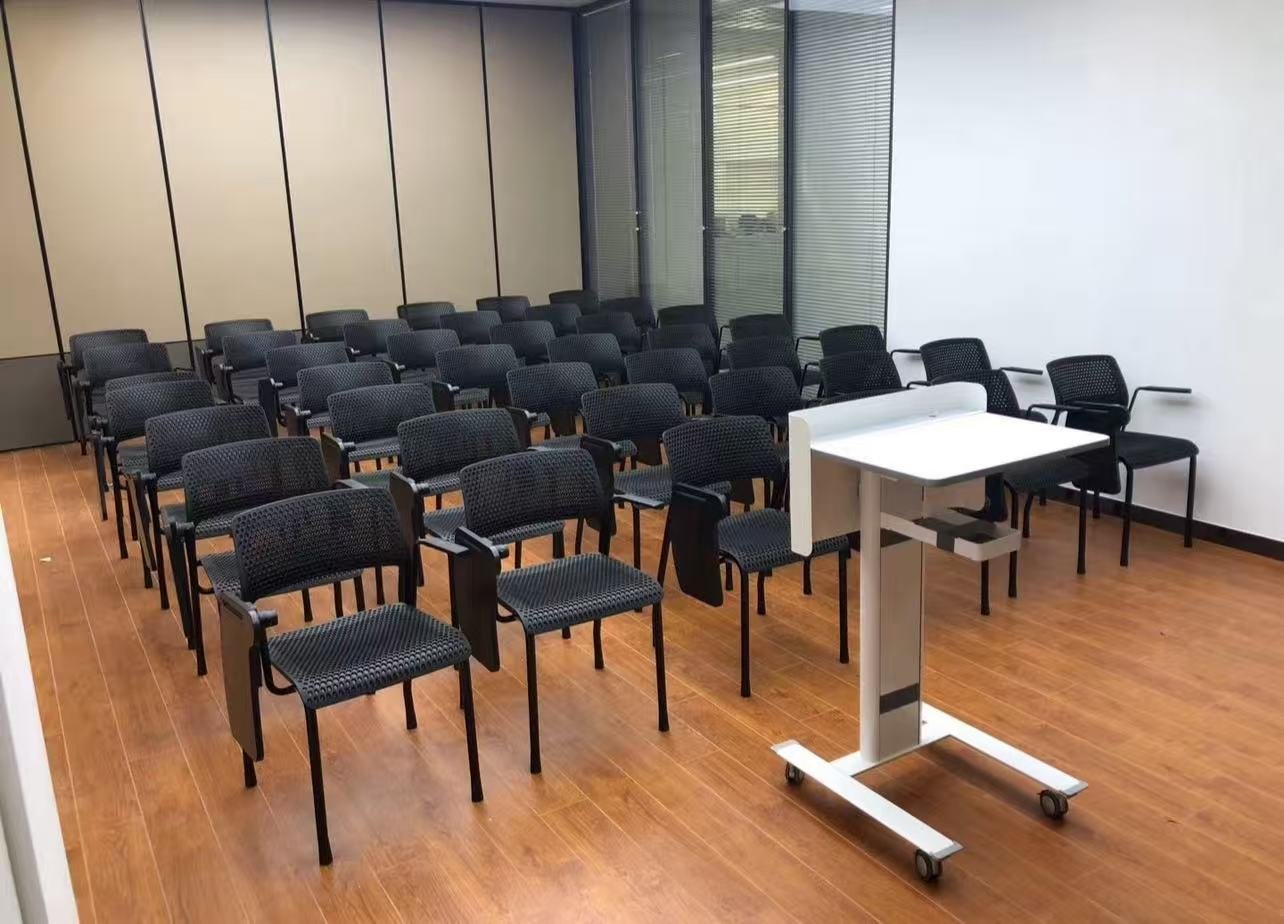
A
classroom chair with writing pad combines a seat and a compact work surface in one footprint. It can help schools, training centers, examination rooms, and lecture spaces increase layout flexibility without installing a separate desk for every user.The right model supports note-taking and device use while remaining comfortable, stable, easy to clean, and practical to store.For bulk buyers, the key is to evaluate the entire chair system. The writing surface, frame, seat, movement method, and storage plan must work together.
When a Classroom Chair with Writing Pad Makes Sense
Writing-pad chairs are useful when a room hosts lectures, tests, onboarding, language classes, or short courses. They are especially helpful in compact rooms where separate desks would reduce capacity or make layout changes slower.They may not be the best solution for activities that require large textbooks, multiple devices, laboratory tools, or hours of continuous desk work. In those cases, conventional
training tables and separate chairs may provide more working area.Before ordering, define what students will normally place on the pad. A surface intended for a notebook may not safely support a larger laptop or multiple learning materials.
How to Evaluate the Writing Pad
Usable Surface Area
Ask for the usable dimensions, not only the overall shape. Curved edges, cup recesses, and mounting hardware can reduce the space available for writing.A full-size sample is the most reliable way to test notebooks, tablets, or other items used in the classroom.Project buyers should confirm:
- Overall writing-pad dimensions
- Usable flat surface area
- Maximum recommended load
- Suitable notebook and device sizes
- Surface material and thickness
- Edge finish
- Cleaning requirements
The writing pad should remain stable during normal use. It should not move excessively when a student writes or places learning materials on it.

Left- and Right-Hand Options
Many projects need both orientations. Confirm whether the writing pad can be supplied for left-handed and right-handed users, whether it is interchangeable, and how many of each version will be included.Accessibility requirements should be discussed during planning rather than after delivery.Questions to ask include:
- Is a left-handed version available?
- Can the writing pad be installed on either side?
- Can staff change the orientation after delivery?
- Are both versions packed and labeled separately?
- How many left-handed chairs should be included in the project?
The required mix should be included in the purchase order to prevent confusion during production and installation.
Folding and Removal
A folding pad lets users enter and leave the chair more easily. A removable design can simplify replacement and allow one chair family to serve several room types.The hinge or pivot should operate smoothly and should not create obvious pinch points during normal use.The
HAKKAS YB4-X training chair with writing tablet uses a removable folding writing surface and a stackable frame, making it relevant for classrooms that need both note-taking support and compact storage.
Edge Finish and Cleaning
Students touch the pad throughout the day. Smooth edges, a stable connection, and an easy-clean surface are therefore important.Ask how the material responds to regular wiping and whether the writing surface or mounting parts can be replaced.The material should also suit the operating environment. Schools and training centers with high daily turnover may prefer surfaces that are easy to maintain and do not require specialized cleaning products.
Chair Comfort Still Matters
The writing pad should not distract buyers from the seat.Compare:
- Backrest shape
- Seat height
- Seat depth
- Front-edge comfort
- Back ventilation
- Cushion options
- Typical lesson length
An upholstered seat may suit longer sessions, while molded PP can be a practical choice for high-turnover classrooms.General ergonomics guidance from
OSHA can help project teams frame discussions about posture and the relationship between users and their work surfaces.Final product selection should still reflect the student population, average session length, and local requirements.

Choose the Right Base for the Room
A classroom chair with writing pad may use one of several base types.
Fixed Four-Leg or Sled Frame
A fixed frame works well for stable classroom rows. It provides a controlled seating arrangement and may be appropriate where chairs do not need to move frequently.Buyers should check the frame finish, floor-protection glides, and stacking capability.
Stackable Frame
Stackable chairs are suitable for rooms that need vertical storage. Confirm how many complete chairs can be stacked with the writing pad attached.The writing surface may affect the stacking angle and total stored height.
Folding and Nesting Frame
A folding or nesting design is useful when staff need to collect chairs quickly and clear the room. A flip-up seat can help reduce the space required between nested chairs.Ask for the complete nested dimensions rather than evaluating only the individual chair.
Caster Base
Casters are useful for collaborative classrooms and training rooms that change layouts frequently.However, buyers should consider:
- Floor material
- Wheel noise
- Movement control
- Wheel durability
- Replacement availability
- Stability when the user sits down
Fixed glides may be more suitable where chairs must remain aligned in rows.
Plan Storage Before Approving the Chair
The writing pad can change the stacking or nesting geometry.Ask the supplier for:
- The number of chairs that can be stacked naturally
- The number a matching trolley can hold
- The complete stored dimensions
- Whether the writing pad stays attached
- Whether the pad must be folded before storage
- Recommended handling instructions
- Trolley dimensions and wheel specifications
If books and bags often block aisles, a lower storage rack may be useful.The
HAKKAS YB1-ABXJ folding training chair combines a writing tablet with a storage rack, upholstered seat, silent casters, and a folding structure.
Consider a Storage Rack for Bags and Books
Students often bring backpacks, notebooks, documents, and electronic devices into the classroom. Without dedicated storage, these items may be placed in aisles or underneath seats.A lower storage rack can keep personal items closer to the user while helping maintain clearer circulation.Before choosing this feature, confirm:
- Available storage space underneath the seat
- Clearance for the user’s legs
- Whether the rack affects folding or stacking
- Frame strength
- Cleaning access
- Compatibility with common bag sizes
The storage rack should be evaluated as part of the complete chair rather than added after the model has been approved.
Check the Classroom Layout
A chair with a writing pad needs more working space than a basic side chair. The floor plan should use the complete chair dimensions, including the tablet in its normal working position.Buyers should allow adequate space for:
- Entry and exit
- Movement between rows
- Instructor circulation
- Emergency routes
- Accessible seating positions
- Doors, columns, and fixed equipment
Do not calculate room capacity using seat width alone.For larger projects, placing the chair dimensions into a scaled layout can help identify problems before ordering. A sample chair can also be tested inside the actual room.
Bulk-Purchase Checklist
Include the following information in your request for quotation:
- Student age group
- Typical class duration
- Room size
- Target number of seats
- Estimated order quantity
- Required writing-pad dimensions
- Writing-pad material
- Left-hand and right-hand quantities
- Fixed, stackable, nesting, or caster base
- Seat and back material
- Required colors
- Storage-rack requirements
- Destination country
- Packing and labeling requirements
- Expected delivery date
A detailed project brief helps the manufacturer provide an accurate configuration and prevents last-minute changes to accessories, packing, or production.
Why Work with HAKKAS?
HAKKAS supplies training chairs and commercial seating for classrooms, seminar rooms, corporate training spaces, meeting areas, and flexible learning environments.Available configurations include:
- Fixed classroom chairs
- Stackable training chairs
- Folding and nesting chairs
- Chairs with writing tablets
- Chairs with storage racks
- Mobile training chairs with casters
- Upholstered and PP seating options
- Matching training tables
HAKKAS supports dealers, contractors, importers, educational furniture buyers, and project purchasers with configuration confirmation and bulk-order communication.
Conclusion
The right
classroom chair with writing pad should offer a stable work surface without compromising access, comfort, movement, or storage.Test the writing pad with real learning materials, confirm left-hand and right-hand requirements, and review the chair’s complete storage footprint before placing a bulk order.The lowest-priced chair is not always the most economical choice. A suitable model should help staff manage the room efficiently while supporting students throughout daily classroom use.
Planning a classroom or training-room project? Send HAKKAS your room capacity, target quantity, writing-pad requirements, and destination to receive a suitable model recommendation and quotation.Frequently Asked Questions
Is a writing pad large enough for a laptop?
It depends on the pad dimensions and the laptop size. Buyers should test the intended device on a sample and confirm the supplier’s recommended use before ordering.
Can classroom chairs with writing pads be stacked?
Some models can be stacked or nested, but the writing-pad position affects storage. Confirm the approved stacking quantity, trolley compatibility, and stored dimensions for the exact configuration.
Should schools order left-handed writing pads?
Schools should plan an appropriate number of left-hand configurations based on their users and applicable accessibility requirements. Confirm whether the supplier offers a dedicated, interchangeable, or reversible option.