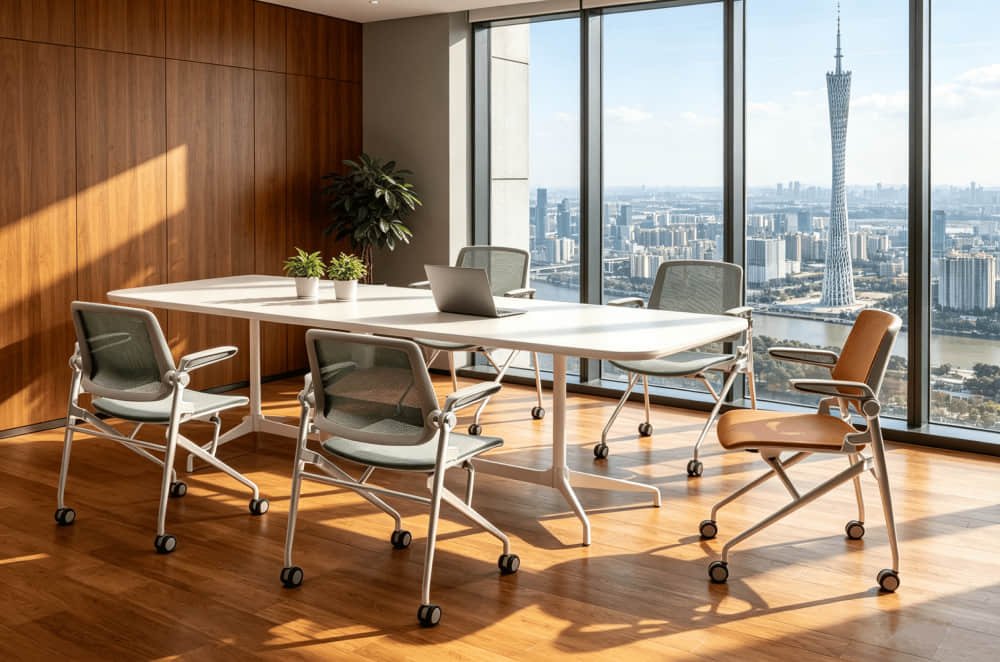
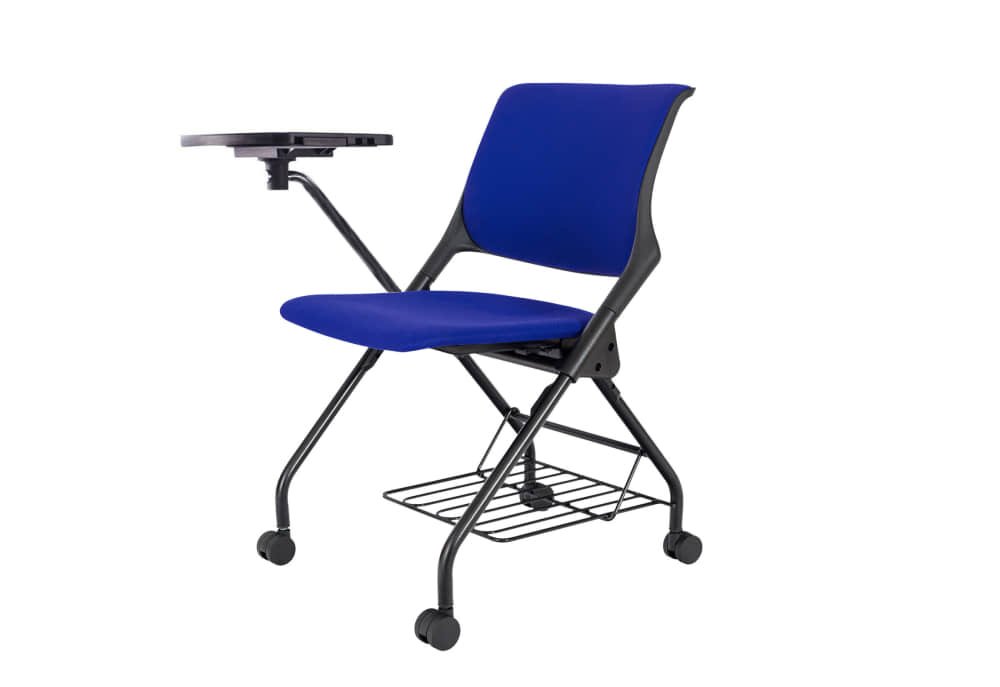
A training chair with casters is a practical seating solution for classrooms, seminar rooms, conference facilities, workshops, and corporate training spaces. The casters make it easier to move and reposition the chair when the room layout needs to change.
Compared with a fixed-leg chair, a mobile training chair supports faster room setup and more flexible seating arrangements. It is useful for spaces that regularly switch between classroom rows, group discussions, presentations, and open-floor activities.
What Is a Training Chair with Casters?
A training chair with casters is a commercial chair equipped with wheels or casters at the base. The casters allow users or staff to move the chair across the floor with less lifting and effort.Depending on the model, a training chair with casters may also include:
- A writing tablet
- A breathable PP backrest
- A padded seat
- Armrests
- A folding frame
- A storage rack
- Locking casters
- A stackable structure
These features allow buyers to select a chair based on room size, user requirements, and the frequency of layout changes.

Benefits of Mobile Training Chairs
Training rooms often serve multiple purposes. A room may be used for employee training in the morning, a group workshop in the afternoon, and a presentation or meeting later in the day.Casters allow chairs to be repositioned quickly without carrying each chair individually. This can reduce setup time and make room changes easier for teachers, facility managers, and event staff.Key benefits include:
- Easier chair movement
- Faster room reconfiguration
- Less lifting during setup
- Flexible classroom layouts
- Convenient group work arrangements
- Suitable for multipurpose spaces
- Better mobility for temporary events
For larger facilities, mobile chairs can also help staff prepare rooms more efficiently between sessions.
Choosing the Right Casters
Not all casters are designed for the same floor type or application. Buyers should consider the flooring, chair weight, movement frequency, and whether the casters need a locking function.Important caster features include:
- Caster diameter
- Wheel material
- Swivel or fixed movement
- Locking mechanism
- Floor compatibility
- Noise level
- Load capacity
- Maintenance requirements
For hard floors, soft or floor-friendly caster materials may help reduce scratches and noise. For carpeted areas, larger casters may move more smoothly.If the chair will remain stationary during lessons, locking casters can provide additional stability.
Comfort and Ergonomic Support
Mobility should not reduce seating comfort. The backrest should provide suitable support, while the seat should match the expected duration of use.A perforated PP backrest can improve airflow and make cleaning easier. A curved ergonomic design may support the back and waist during longer training sessions.For seminars and corporate learning, a padded seat can provide additional comfort. For high-volume classrooms, a molded PP seat may be preferred because it is durable and easy to maintain.Explore more options in our
training chair collection.

Frame Strength and Chair Stability
A training chair with casters should have a stable frame that supports regular movement and daily commercial use. Steel tubing is commonly used because it provides strength and reliable support.A powder-coated finish can help protect the frame from corrosion, scratches, and regular wear. The caster connection should also be secure and designed for repeated movement.When comparing models, review:
- Frame tube diameter
- Tube thickness
- Caster connection
- Welding quality
- Seat height
- Chair weight
- Foot or base structure
- Surface treatment
For commercial furniture projects, buyers can review the
BIFMA furniture standards when comparing product quality and durability requirements.
Casters, Stacking, and Storage
Some mobile training chairs are designed for stacking, while others are intended to remain separate and move independently. Buyers should confirm how the casters affect storage and whether the chairs can be placed on a transport trolley.Before ordering, check:
- Whether the chairs are stackable
- Stacking height
- Trolley compatibility
- Storage area clearance
- Caster locking function
- Chair weight
- Packing dimensions
- Quantity per carton
A well-planned storage system can make it easier to move chairs between classrooms, training rooms, and storage areas.
Suitable Applications
A training chair with casters is suitable for:
- School classrooms
- Corporate training rooms
- Seminar rooms
- Conference facilities
- Lecture halls
- Workshops
- Examination rooms
- Hotel meeting rooms
- Community learning centers
- Multipurpose halls
The chair is especially useful where seating positions need to change regularly.
Questions to Ask the Supplier
Before placing a bulk order, buyers should ask:
- Are the casters suitable for the intended floor type?
- Do the casters swivel or move in one direction?
- Do they include a locking function?
- What is the recommended load capacity?
- Is the chair stackable?
- Is a transport trolley available?
- What materials are used for the seat and backrest?
- What is the chair’s seat height?
- Can colors and accessories be customized?
- Can product samples be provided?
A reliable supplier should provide clear specifications, product samples, packaging information, and project support.
Final Buying Advice
The best training chair with casters should combine smooth movement, stable construction, comfortable seating, and compatibility with the room’s flooring and storage method.Before selecting a model, consider the room size, frequency of layout changes, floor material, need for locking casters, and expected storage arrangement.For product specifications, customization, and bulk order support, please
contact our team.