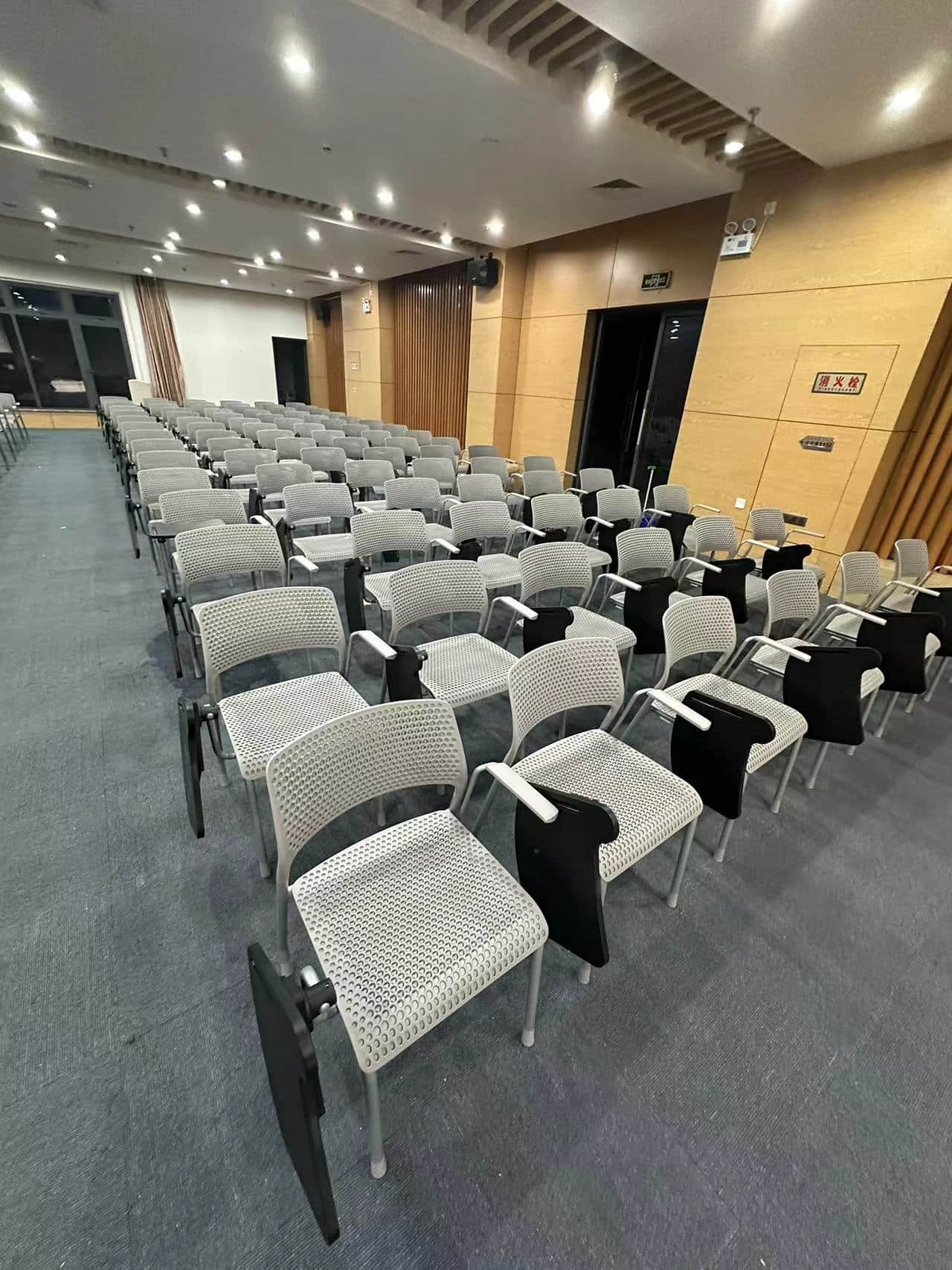
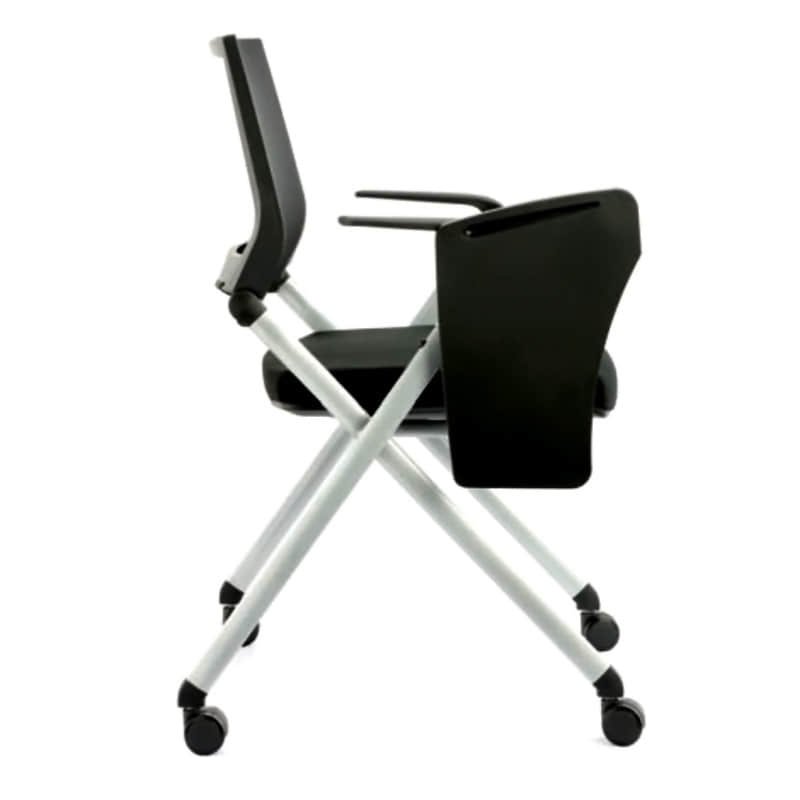
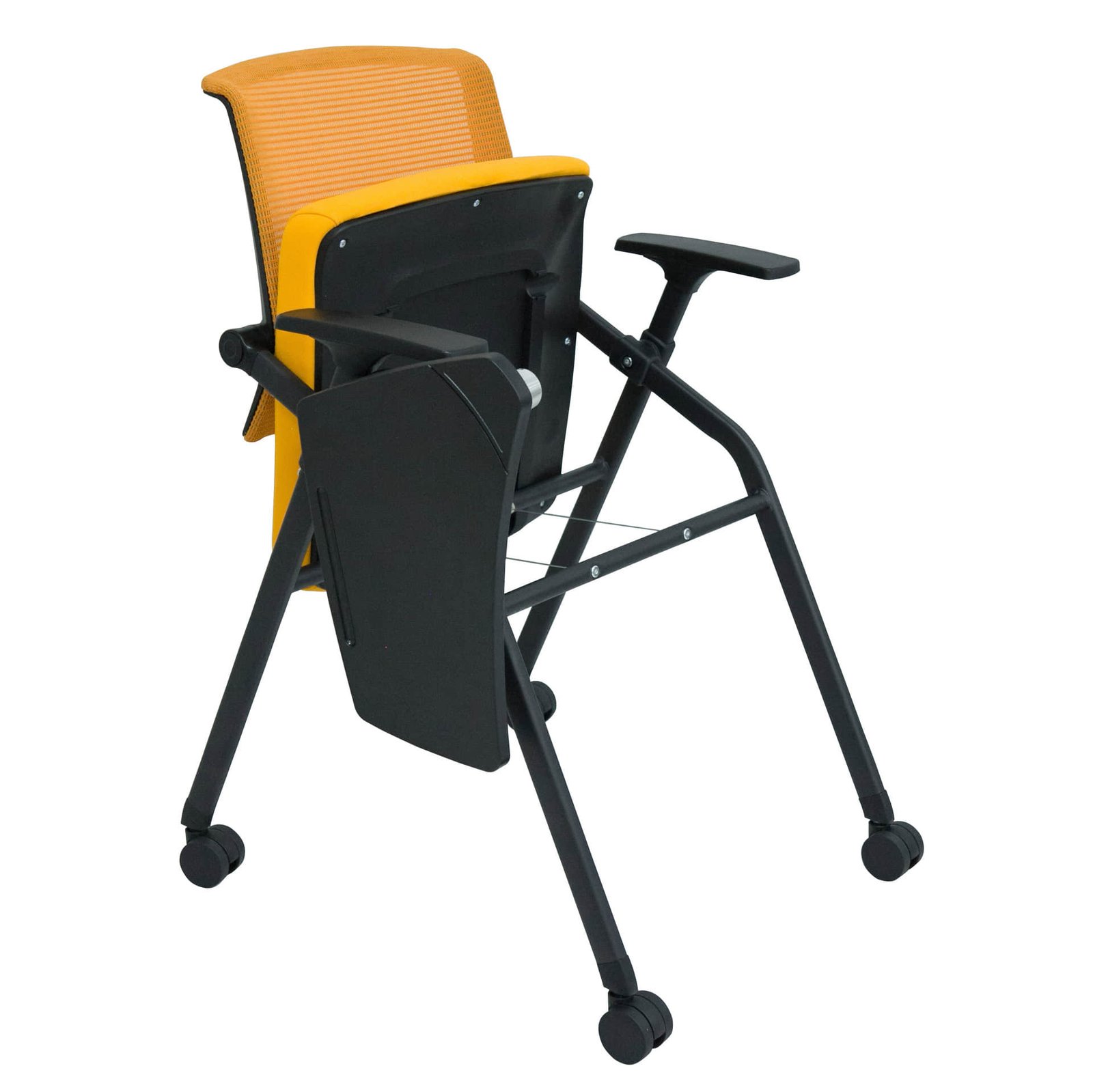
A training chair with writing pad is one of the most practical seating choices for classrooms, corporate training rooms, seminar spaces, and lecture areas. Compared with a standard chair, it gives users a compact writing surface for notes, laptops, tablets, handouts, or short assessments. For project buyers, the right model can reduce the need for separate desks, improve room flexibility, and make the whole space easier to manage.For schools, offices, hotels, training centers, and public institutions, seating is not only about comfort. Buyers also need to consider storage, cleaning, durability, movement, packing, and long-term maintenance. That is why choosing a training chair with writing pad should be based on real use instead of appearance alone.

Why a Training Chair with Writing Pad Works Well in Flexible Spaces
A training chair with writing pad is especially useful in rooms where layouts change often. One day the space may be used for staff training, and the next day it may become a seminar room, exam room, or internal meeting space. A chair with its own writing surface allows the room to stay simple and flexible.This type of chair also saves space. In many classrooms or conference rooms, full-size desks take up too much floor area. A writing pad gives each user a personal work surface while keeping the seating layout more compact. For bulk projects, buyers can also review matching options in the
Training Chairs category.
Check the Writing Pad Size and Stability
The writing pad is the most important part of this chair type. A good training chair with writing pad should have enough surface area for notebooks, documents, or a small device. The tablet should feel stable when users write on it and should not shake too much during daily use.For commercial projects, it is better to choose a writing pad made from durable PP, ABS, or laminated board materials. These materials are easier to clean and more suitable for frequent use. If the chair is used in schools or training centers, rounded edges are also helpful because they feel safer and more comfortable during long sessions.

Choose the Right Frame Structure
A training chair with writing pad needs a strong frame because the writing surface adds extra weight and movement to the chair. Steel tube frames are commonly used for commercial training chairs because they offer good strength, stable support, and better durability.For daily training rooms, powder-coated steel frames are a practical option. They help resist scratches and corrosion while keeping the chair suitable for high-frequency use. Buyers comparing commercial seating durability can also refer to
BIFMA standards when setting project requirements.
Consider Comfort for Longer Sessions
Comfort matters because training sessions often last for several hours. A good training chair with writing pad should support the back, keep the seat stable, and allow users to sit naturally while writing. Breathable backrests, curved PP backs, mesh backs, and padded seats are all common options.For short classroom use, a PP seat may be enough. For corporate training rooms or seminar spaces, an upholstered seat can improve comfort and give the room a more professional look. If the chair will be used by adults for long periods, ergonomic support should not be ignored.
OSHA ergonomics guidance is a useful reference when planning workplace seating.
Folding, Stackable, or Nesting Design?
Different projects need different storage methods. A folding training chair with writing pad is useful when the chair needs to be stored flat or moved between rooms. A stackable model is better when buyers need to store many chairs in a compact area. A nesting chair with casters is suitable for modern training rooms where layouts change quickly.If your project needs fast setup and storage, the folding structure may be the most practical. If the room needs a cleaner commercial look, nesting chairs with writing pads can also work well. For more space-saving models, buyers can review our
Folding Training Chairs category.

Match the Chair to the Room Type
A training chair with writing pad can be used in many different spaces, but the best model depends on the room. For classrooms, simple and durable PP chairs are usually enough. For corporate training rooms, buyers may prefer cushioned seats, casters, and a cleaner design. For seminar rooms, the chair should look professional and allow quick arrangement.In hotels or conference centers, flexibility is very important. Chairs may need to support lectures, group learning, product training, and small events. In this case, models with writing pads, storage racks, and silent casters can make daily operation easier.
Think About Bulk Orders and Packing
For B2B buyers, packing size, carton quantity, loading capacity, and repeat supply are just as important as the product itself. A training chair with writing pad should be easy to ship, store, and assemble. Before placing a bulk order, buyers should confirm product size, net weight, packing size, CBM, and pieces per carton.It is also useful to ask whether the supplier can support color options, writing pad direction, logo customization, and mixed container orders. For schools, offices, and training centers, these details can affect the final project cost and delivery schedule.
Work with a Reliable Training Chair Supplier
A reliable supplier should provide clear product parameters, real product photos, packing information, and project support. When choosing a training chair with writing pad, buyers should not only compare price. They should also check materials, frame thickness, writing pad quality, lead time, packaging, and after-sales communication.
HAKKAS supplies training chairs, folding chairs, stackable chairs, writing tablet chairs, and training tables for commercial projects. Buyers planning classroom, office, or seminar seating projects can contact us for model recommendations and bulk order support.
Final Buying Tips
Before choosing a training chair with writing pad, check how the room will be used, how often the chairs need to move, and whether users need extra comfort for longer sessions. A practical model should balance writing function, seating comfort, storage efficiency, and long-term durability.For most commercial projects, the best choice is not always the cheapest chair. It is the model that fits the layout, handles daily use, ships efficiently, and keeps the room easy to manage.